
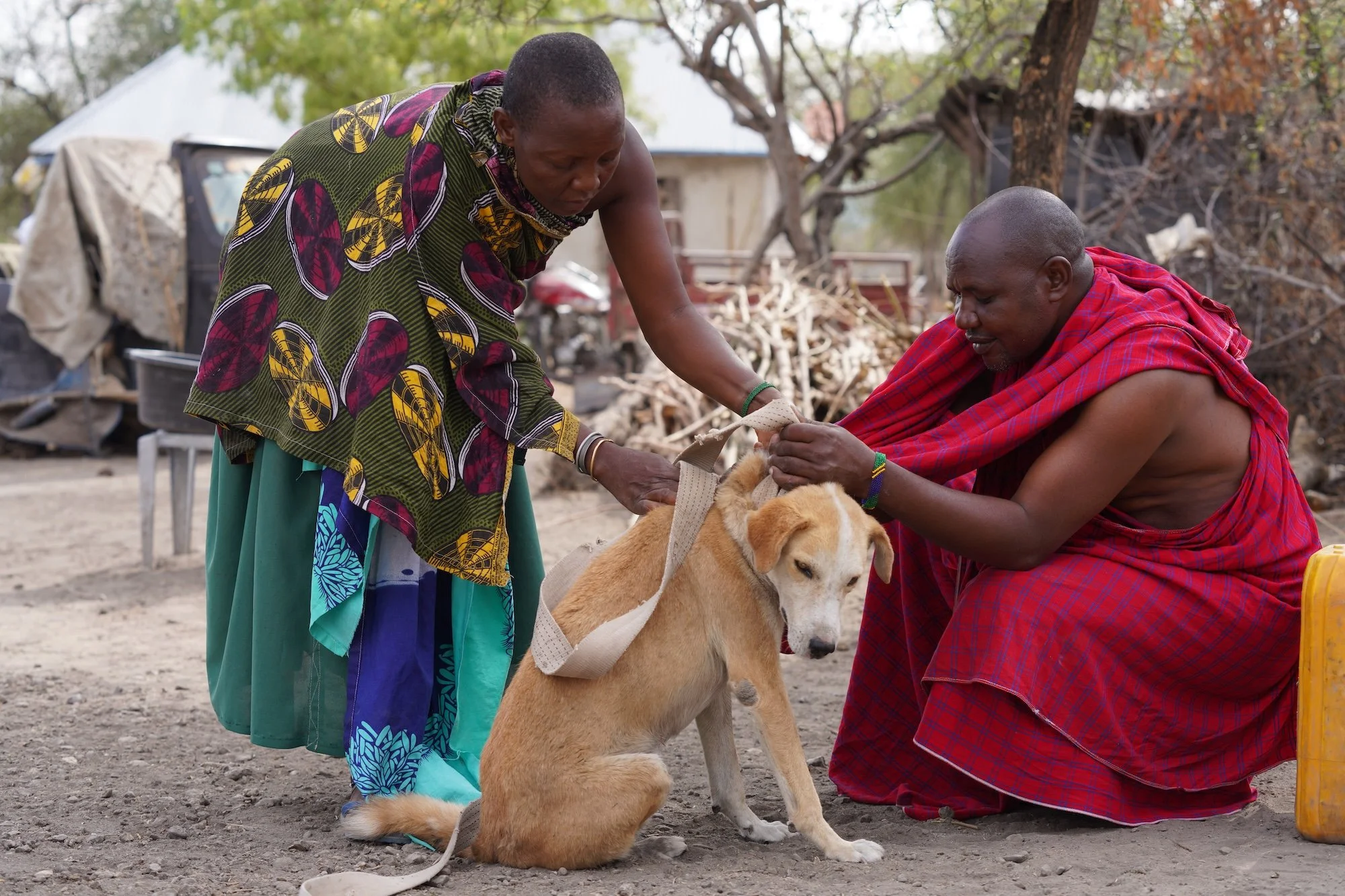
Healthy Dogs.
Healthy Herds.
Thriving Families.
In rural Tanzania, a dog's health determines whether a family's livestock survives. We're breaking the cycle of disease — one community at a time.
A Hidden Threat to Maasai Livelihoods
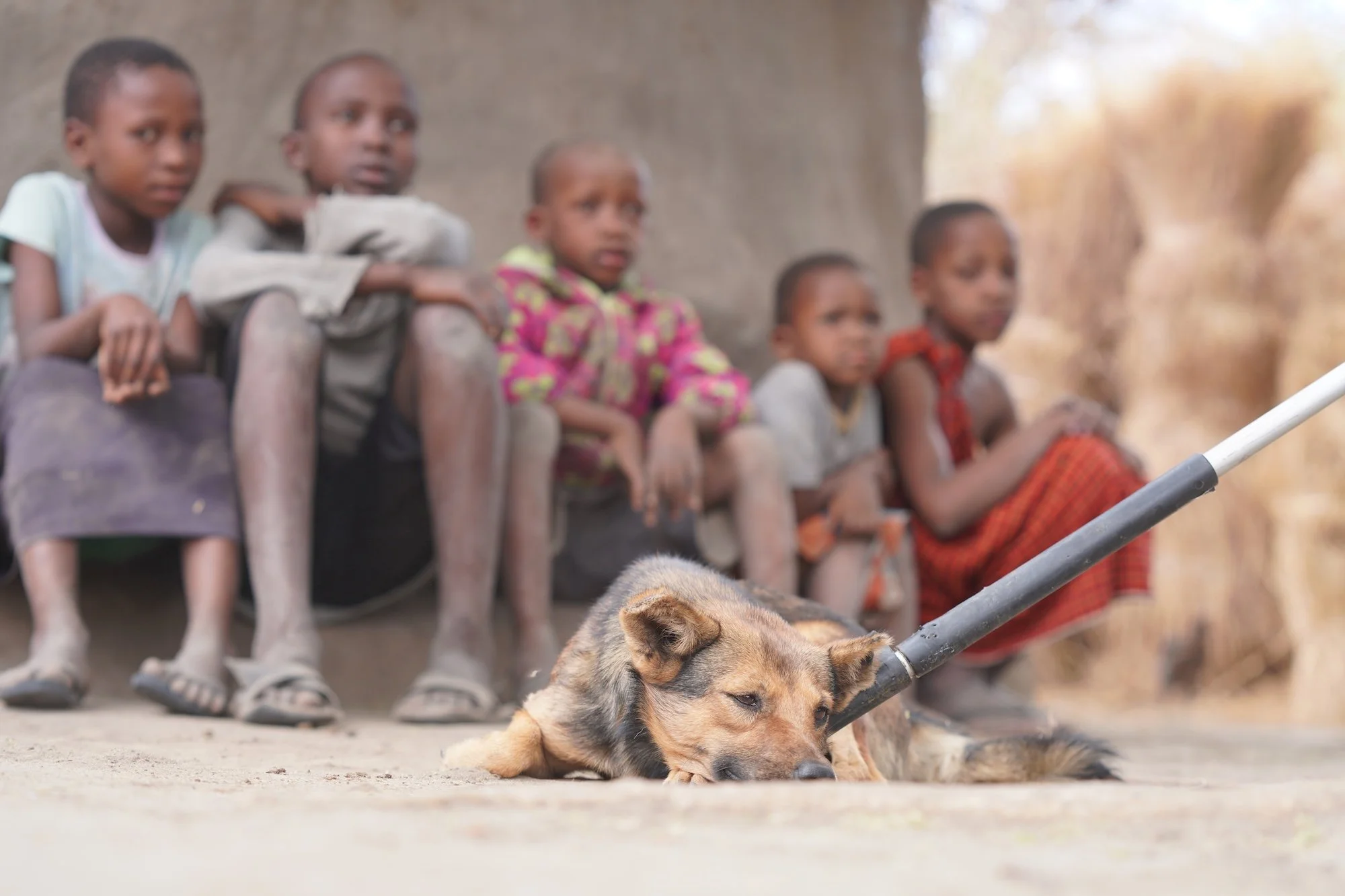
For Maasai families, livestock aren't just animals — they are food, income, and cultural identity. But a parasite carried silently in dogs has been killing goats and sheep across Tanzania and other African countries.
Dogs become infected with the tapeworm, Taenia multiceps, and ultimately shed the eggs into the environment. Those eggs contaminate grazing land. Livestock graze, ingest the eggs and an abnormal parasite migration can result in a fatal brain disease. A family loses an animal. Then another.
The solution is surprisingly simple: deworm the dogs.
6,300+
Dogs dewormed in 2025.
3,100+
Rabies vaccinations completed.
Sharp Decline
In coenurosis cases reported by Maasai households.
One Health. One Simple Idea.
Step 1:
Treat the Dogs
We deworm dogs quarterly using broad-spectrum medication, removing the tapeworm that causes the disease.
Step 2:
Protect the Livestock
With fewer infected dogs, grazing areas stay clean. Goats and sheep stay healthy. Herds survive.
Step 3:
Strengthen Families
Healthy livestock means food security, economic stability, and preserved cultural heritage for Maasai communities.
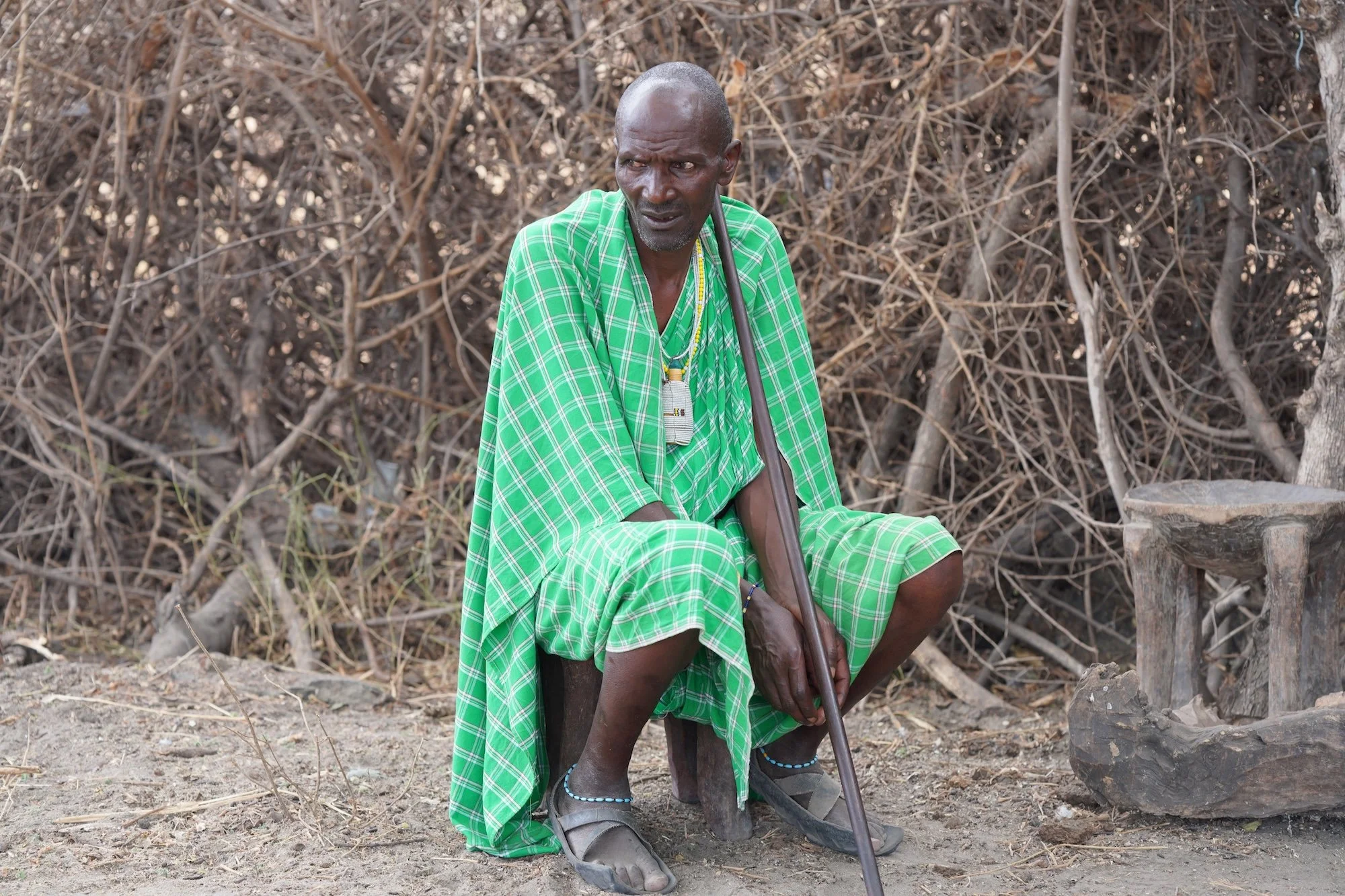
"In the past, coenurosis was a concern for nearly every Maasai household. Today, only a small number of families report seeing signs of the disease in their animals."